Residential & commercial filter care

Better filter care.
Better comfort starts here.

Understand filter grades, see why airflow matters, and build a practical inspection schedule for your home or business.

No app neededYour choice of scheduleHelp when you need it
Real Heco service photos

A small filter. A big role in airflow.

Build My Filter Schedule ↓

A dirty air filter can restrict the air your system needs to move. The result can be weaker comfort, inefficient operation and equipment problems. Replacing a loaded filter is a useful first step—but persistent symptoms still need diagnosis.

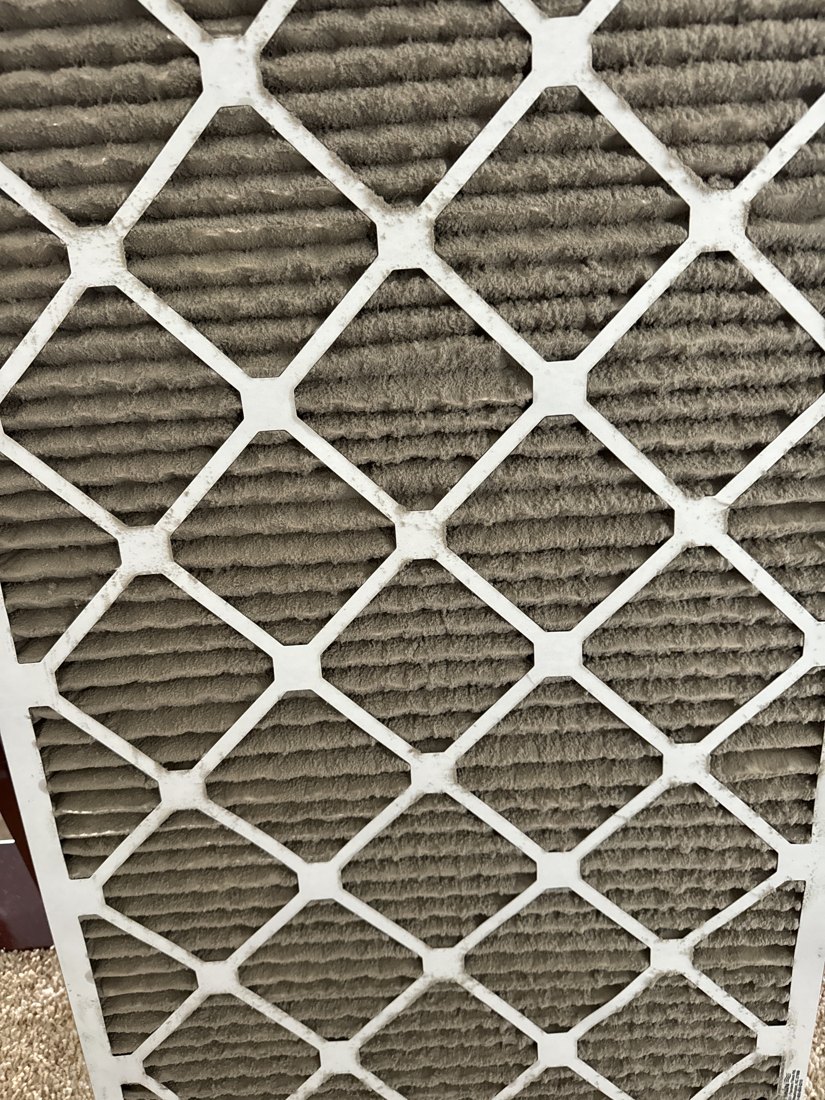
Heco service photo showing dense dust buildup across the pleats of a used air filter
Before · visibly loaded filterDust has accumulated across the filter media.
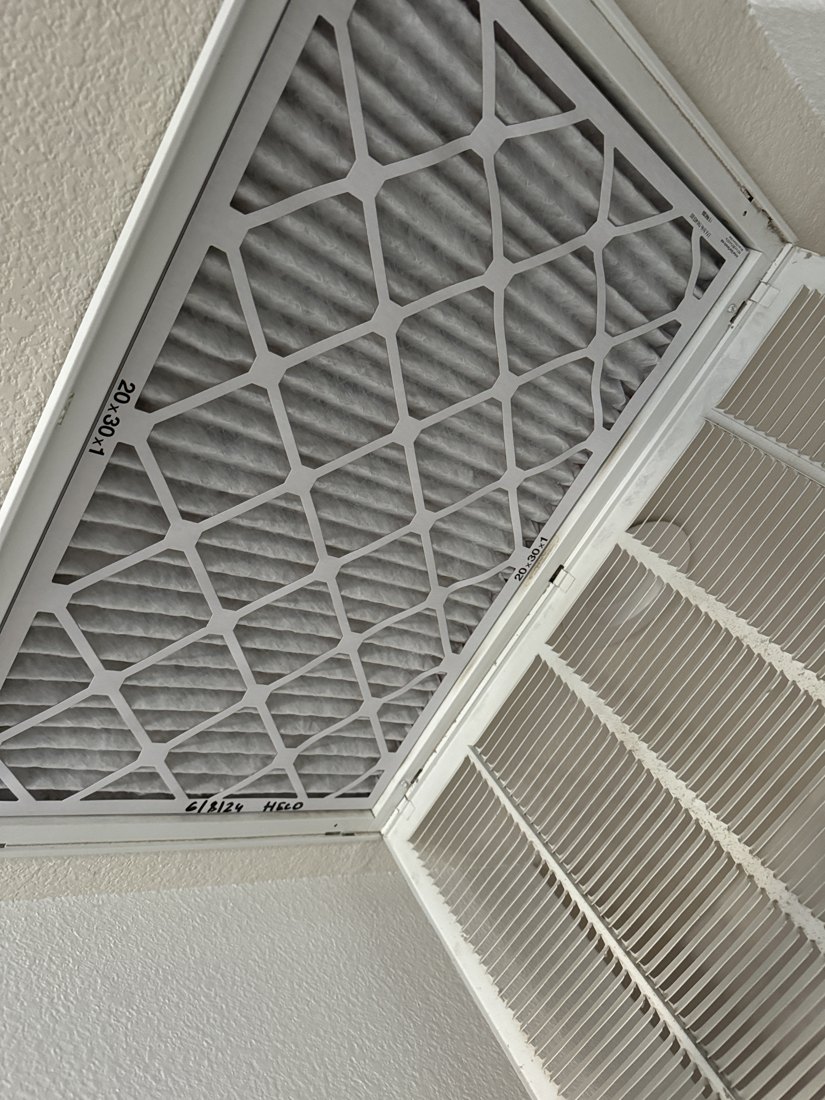
Heco service photo of a replacement 20 by 30 by 1 air filter installed in a ceiling return grille
After · replacement installedA fresh filter is fitted in the return grille.

Photos supplied by Heco. Appearance alone cannot identify MERV rating, measure pressure drop or prove equipment damage. No measured energy savings are claimed for this job.

Why a dirty filter can waste energy

Your blower moves return air through the filter before the system conditions it. As the filter loads, resistance increases. Reduced airflow can leave rooms uncomfortable and make the system run longer to meet the thermostat setting. Actual energy use depends on the blower, controls and installation; there is no reliable dollar-savings estimate from a photo alone. ENERGY STAR explains filter maintenance and energy use.

Can it damage the blower motor?

Airflow restriction can contribute to blower stress and operating problems. A dirty filter does not mean a motor has failed, and different blower designs respond differently to restriction. If a new, correctly fitted filter does not resolve weak airflow, unusual noise or repeated shutdowns, ask for an airflow and blower assessment. Carrier discusses clogged filters and blower troubleshooting.

Heating trouble: overheating and short cycling

A furnace needs enough air moving across its heat exchanger. Restriction can cause overheating and a safety-limit shutdown; the blower may continue running while the burners stop. Repeated shutdowns are a reason to request service. Never bypass a safety switch or repeatedly reset the equipment to keep it operating. Read Carrier’s explanation of airflow-related furnace overheating.

The wrong filter can also restrict airflow

Choosing by MERV alone misses important details. A filter must match the cabinet, seal correctly and stay within the equipment’s allowable resistance. A higher-efficiency filter can work well in a compatible system; a poorly selected filter, an overloaded filter or filters stacked in an unapproved arrangement can create problems. Ask Heco to verify fit and airflow before changing the filtration setup. EPA’s filter-selection guidance.

When a filter change is not enough

Stop normal operation and request service if you notice ice, repeated overheating/shutdowns, a stalled blower or an electrical burning smell. For a gas odor or CO alarm, leave the building and contact your gas utility or emergency services from a safe location. Do not open electrical or gas compartments, climb onto a roof, or use an unsafe ladder to reach a filter.

Understand before you upgrade

MERV: the number is only part of the decision.

MERV describes how effectively a filter captures tested particle sizes. It does not tell you the filter’s lifespan or whether it is the correct fit for your system.

A visual guide to particle capture

Smaller particles need a closer look.

Choose a MERV rating to compare its minimum capture efficiency across three tested particle-size ranges.

Illustrations are symbolic, not to scale. Dust, dander, pollen and smoke contain varying particle sizes; the examples do not mean every particle of that type is captured. Percentages describe test performance for air passing through a filter—not whole-room removal or protection from illness. “No stated minimum” does not mean zero capture.

Original Heco illustration based on EPA’s MERV comparison table. See also AprilAire’s filter guide. Standard particle filters do not remove gases such as carbon monoxide.

MERV 1–4

Basic particle capture

Limited capture of larger particles. Do not assume a basic filter meets your equipment or indoor-air goals.

MERV 5–8

More everyday dust capture

Improved capture of larger airborne particles. Products within this range differ in performance.

MERV 9–12

Finer particle filtration

More capture of smaller particles than lower grades. Confirm fit and resistance for the actual product.

MERV 13–16

Higher-efficiency filtration

Better capture of fine particles. Use a grade your equipment and filter cabinet can accommodate.

Heco’s approach: better filtration with suitable airflow. EPA recommends MERV 13, or the highest rating the system can accommodate, when upgrading. Higher MERV does not automatically mean excessive resistance; compare the actual filter’s pressure drop at the required airflow. A compatible deeper-media cabinet may offer more options, but thickness alone is not a guarantee. HEPA is a separate filtration category, not a direct replacement for a standard filter. EPA: MERV ratings explained.

What about MPR and FPR?

These are proprietary rating systems. Do not treat their numbers as interchangeable with MERV or rely on an approximate conversion chart to select a filter.

Dust, pets, pollen or smoke?

Tell Heco your concern when requesting advice. The right response may involve filtration, source control or a separate air cleaner; an HVAC filter does not remove every pollutant or replace ventilation.

Get the fit and filter type right

Before you buy: size, media and airflow.

Printed size versus actual dimensions

The size on the frame can be a nominal label. Actual width, height and depth may be smaller and can differ between products with similar labels. Check the equipment’s required dimensions and the replacement’s actual measurements. The filter should seat and seal properly without being bent, forced in or leaving bypass gaps.

Disposable or washable?

Replace disposable filters when required. Clean a reusable filter only by its manufacturer’s method and reinstall it as instructed. Flat and pleated describe construction; neither appearance nor pleat count establishes a MERV rating or a pressure-drop limit. Use the product’s tested specifications.

Does a carbon filter remove odors?

MERV measures particles, not gases. Activated carbon can adsorb some gases and odors, depending on the material, amount and pollutant. A thin carbon layer is not a universal odor solution and does not make an ordinary filter protection against carbon monoxide. Find and address the odor source first.

Why two MERV 13 filters may behave differently

Media area, construction, fit, leakage and rated airflow affect performance. Compare the pressure drop at your system’s airflow, not just the number on the box. A cabinet upgrade may be needed for a different depth or filtration setup; do not stack filters or modify the slot to make one fit.

Selection references: EPA’s home air-cleaner guide and AprilAire’s filter comparison guide. Heco confirms the actual filter and equipment before recommending a change.
Put it into practice

Your filter & maintenance planner

Choose Home or Business. Build a reminder, or prepare a request for Heco.

1

Tell us about your filter

We record the current grade, not an automatic upgrade recommendation. Understand MERV and airflow ↑

This is your chosen check schedule, not a guaranteed filter lifespan. Follow equipment and filter instructions; dust, pets, smoke and use can require earlier checks.


2

How would you like to handle it?

Reminder details stay in this browser. A saved date alone does not send an alert.

Beyond the filter · EPA-based guidance

Cleaner indoor air takes more than a filter.

Filtration is one part of indoor air care. Address pollutant sources, ventilation and moisture as well as the filter in your equipment.

Start with sources and moisture

Reduce indoor pollution at its source and provide appropriate ventilation. Repair leaks and control humidity; a filter cannot fix a damp building or remove growing mold. EPA recommends keeping indoor humidity below 60%, ideally between 30% and 50%. Outdoor smoke or poor air quality can change when ventilation is appropriate.

EPA: improving home indoor air quality →

Mini-split screens are different

A typical ductless mini-split screen protects equipment from larger debris. Do not assume it provides the fine-particle filtration of a compatible high-efficiency central-system filter. Follow the unit’s cleaning instructions; do not insert an unapproved filter. A suitable portable air cleaner may supplement room filtration.

EPA: mini-splits and fine particles →

Portable cleaner? Match it to the room

For particle removal, look at clean air delivery rate (CADR) and the room size the unit is designed to serve. MERV describes a filter; CADR describes a portable cleaner’s clean-air delivery. Placement, operating speed, filter care and runtime affect results. No device removes every pollutant.

EPA: choosing an air cleaner →

Avoid intentional ozone generation

Ozone is a lung irritant. Some ionizing or electronic devices can produce it. An “air purifier” label alone does not establish that a device is suitable for an occupied room. Review its technology and emissions information before buying.

EPA: ionizers and ozone →

A dirty filter is not a mold diagnosis

Dust on a filter does not establish mold in the ducts. Suspected contamination needs assessment, and moisture problems need correction. Ask for evidence of any claimed contamination before approving duct work.

EPA: duct cleaning and mold considerations →

For businesses: involve building management

Filter replacement, outdoor-air delivery, moisture control and equipment maintenance need to work together. Record concerns by room or unit and coordinate with the building’s responsible manager. A filter worksheet does not certify indoor air quality, ventilation compliance or building safety.

EPA: office-building indoor air quality →
These summaries link to EPA guidance for further reading. They do not imply EPA approval of Heco or any product, and they do not promise prevention of illness. Browse EPA’s full IAQ FAQ library →
Straight answers

Air filter questions, answered.

How often should I check my filter?

For a home, start with a monthly inspection, especially during heavy use. Follow the equipment and filter manufacturer’s replacement instructions and check sooner if conditions load the filter quickly. A date reminder is a prompt to inspect, not proof that the filter is still suitable until that date. Commercial schedules should be set for each unit’s instructions, operating hours and environment.

Should I automatically switch to MERV 13?

Consider it when upgrading filtration, but confirm the actual product’s fit and pressure drop with the system requirements. If compatibility is unknown, select “Not sure” in the planner and request Heco’s help. The planner records your preference; it does not approve an equipment modification.

Can a filter reminder tell me a filter is still clean?

No. This tool does not measure filter loading, airflow or pressure drop. Inspect on the chosen date and earlier if conditions or the manufacturer’s instructions require it. A commercial maintenance technician can assess the filter bank and record pressure readings where applicable.

Can I wash a disposable pleated filter?

Only clean a filter if the manufacturer identifies it as washable and gives cleaning instructions. Disposable media generally needs replacement. Never operate the equipment without the required filter while waiting for a replacement.

Do I need a filter at both the return grille and the equipment?

Do not add a second filtration stage unless it is part of the designed system. Extra filters can add resistance. Heco can identify the intended filter locations and check whether the arrangement is appropriate.

Can a business use the same reminder as a home?

A business often has multiple units and different filter banks. Choose Business in the planner, record a unit ID and build a separate entry for each filter group. Heco should confirm equipment requirements, service access, quantities and a maintenance schedule before quoting recurring work.

Does this tool enroll me in a maintenance contract?

No. Saving a reminder or downloading a worksheet does not enroll you. Service and maintenance inquiries open Heco’s booking form; an appointment and any paid plan require separate confirmation. Reminders use your calendar app; this page does not send emails.

Prepared for Heco Heating and Air Conditioning · Educational guide, October 19, 2026. Guidance draws on EPA, ENERGY STAR and Carrier resources linked above. Final filter selection and service scope require the equipment’s instructions and site assessment.