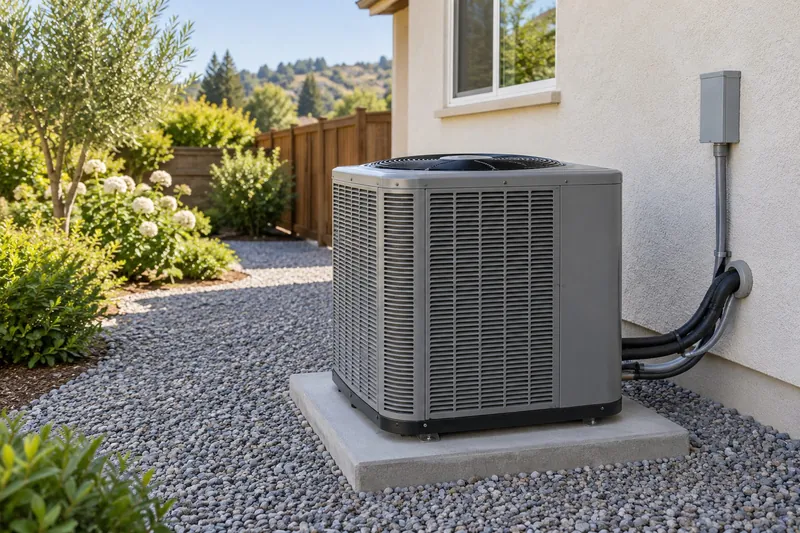
Begin with the diagnosis—not a rule based only on age
A common shortcut says to replace equipment after a certain age or when repair cost reaches a percentage of replacement cost. Those rules may start a conversation, but they do not describe the actual system. A well-installed older unit with an isolated repair is different from a younger unit with repeated failures, poor airflow and mismatched components.
The first question is what failed and why. Ask whether the fault is isolated, whether another system condition contributed, and whether the proposed repair addresses the cause.
Five factors that make the comparison clearer
- Condition: Review the compressor or heat exchanger where applicable, coils, blower, electrical components, controls, refrigerant circuit, drainage and visible installation condition.
- Reliability: Count recent service calls and consider whether failures are related or independent.
- Comfort: Note uneven rooms, humidity concerns, noise, short cycling and whether the system maintains temperature during design weather.
- Operating cost: Compare actual energy use when possible, not only the dollar bill, because weather and utility rates change.
- Project scope: Replacement may involve ducts, electrical work, equipment access, permits, HERS verification, condensate and controls—not only a new outdoor unit.
When repair may be the practical choice
Repair may make sense when testing identifies a limited fault, suitable parts are available, the system otherwise operates properly and the owner is comfortable with its expected reliability. A repair can also provide time to plan a future replacement instead of making a rushed decision during extreme weather.
Ask for the repair scope, price, applicable part or labor warranty, and any condition that could affect the repair’s durability.
When replacement deserves a serious comparison
Replacement becomes more reasonable when failures recur, a major component is damaged, parts or refrigerant create long-term service concerns, the system is mismatched, comfort remains poor, or multiple deficiencies would remain after repair. A planned replacement also creates an opportunity to evaluate heat pumps, variable-capacity equipment, ducts, filtration, controls and current incentives.
Efficiency ratings alone do not guarantee a lower bill. Equipment sizing, ducts, installation, thermostat use, building envelope, rates and weather influence the result.
Questions to ask before accepting a replacement proposal
- What load and property conditions support the equipment selection?
- Are the indoor and outdoor components properly matched?
- What duct, electrical, drainage or control work is included?
- Who obtains permits and coordinates required testing?
- Which efficiency ratings apply to the complete matched system?
- Which rebate requirements apply, and who makes the final eligibility decision?
- What manufacturer and contractor warranties are written into the proposal?
- What is excluded from the price?
Use a side-by-side decision record
Write down the diagnosed repair, repair price, equipment condition, recent service history, replacement scope, expected schedule and any incentives that have been verified. Heco’s Repair or Replace Planner can organize those facts. It is an educational tool, not a diagnosis or quote, but it helps keep the decision focused on your property rather than a generic sales rule.
Need an answer for your HVAC system?
Describe the symptom, property type and equipment. Heco will help identify the next practical step.
Request Service